
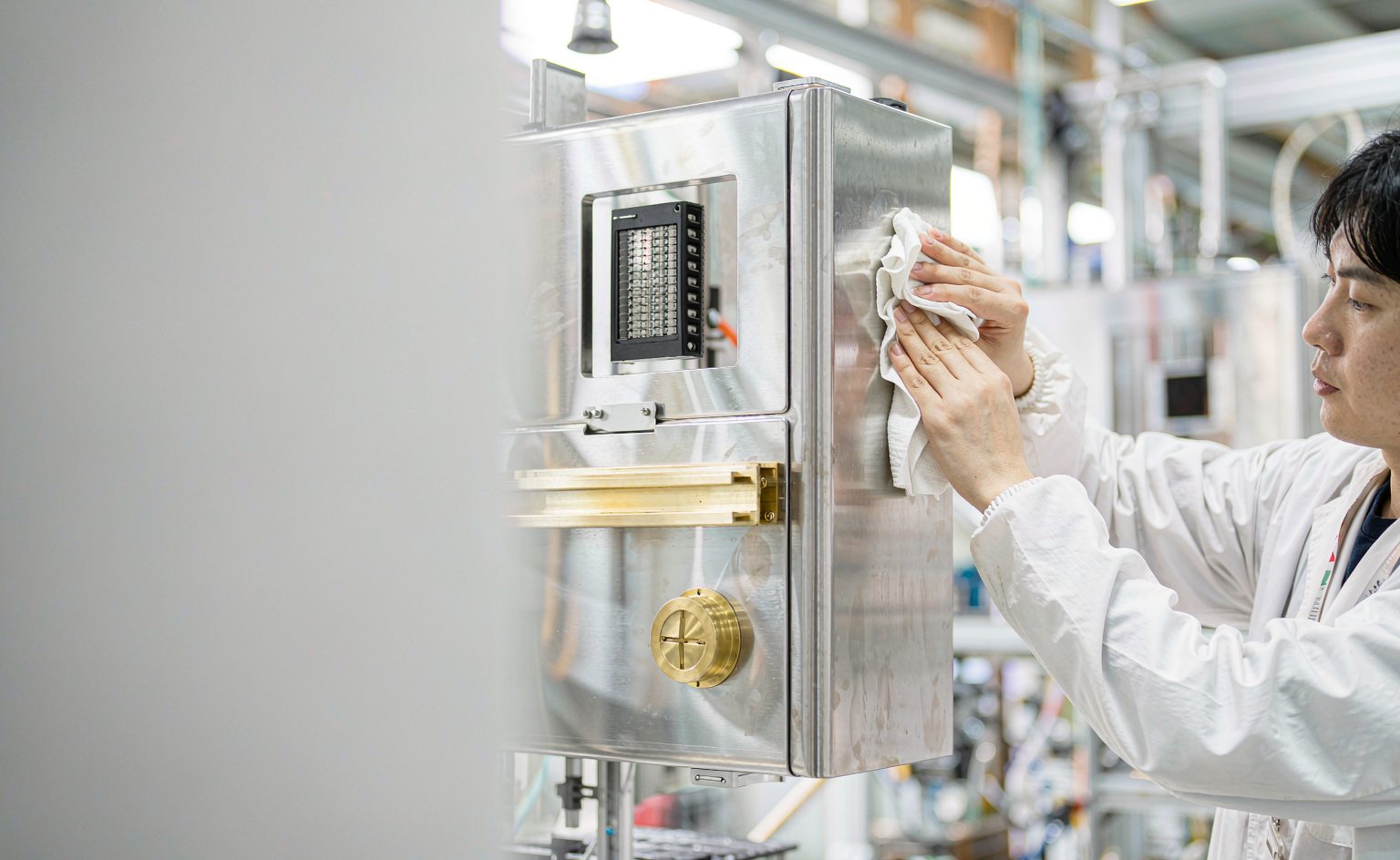
Industry applications
Wiping Cloth Applications by Industry
The same cloth does not fit a wafer tool, a paint booth and a bakery floor. These eight application guides connect the industry, the soil and the cleanroom class to a specific wiper construction — and to the cleaning protocol that makes it work.
 01
Semiconductor & Microelectronics
Wafer fabs, tool wipe-down, ESD-sensitive assembly
Read the application guide 02
Biopharma & Medical Devices
Grade A–D zones, isolators, filling lines
Read the application guide 03
Automotive & EV
Paint prep, battery assembly, surface coating
Read the application guide 04
Aerospace & Rail
Composite bonding, avionics, interior finishing
Read the application guide 05
Optics & Precision
Lenses, displays, instrument surfaces
Read the application guide 06
Printing & Coating
Rollers, printheads, ink systems
Read the application guide 07
Food & Beverage
Food-contact zones, dry cleaning, packaging
Read the application guide 08
Metalworking & Maintenance
Coolant, oil, grease and metal fines
Read the application guide01 Selection matrix
| Industry | Main soil | Recommended material | Edge | Typical class |
|---|---|---|---|---|
| Semiconductor | Particles, solvent residue | Polyester knit / microfiber | Laser / ultrasonic | ISO 3–5 |
| Biopharma | Bioburden, residue | Cellulose blend / microfiber | Sealed; sterile where required | ISO 5–8 |
| Automotive | Wax, oil, overspray | High-friction cellulose blend | Cut / sealed finish | ISO 7–8 / booth |
| Aerospace | Release agent, solvent | Polyester / microfiber | Sealed | ISO 6–8 |
| Optics | Fingerprints, particles | Rayon/polyester, fine microfiber | Cut / sealed | ISO 5–8 |
| Printing | Ink, fountain solution | Cellulose/polyester, microfiber | Cut | Industrial |
| Food & beverage | Grease, food soil | Food-contact X8, cellulose blend | Cut | Food-contact |
| Metalworking | Oil, coolant, fines | Wood pulp/PP X6–X8, meltblown | Cut | Industrial |
02 Start from the failure mode
Particles and fiber
Start with the cleanroom class and the edge. A sealed edge and lot LPC data are the control; a soft cloth alone is not.
Residue and smear
Start with the solvent and the NVR limit. The cloth has to release the soil without leaving a film behind.
Scratches and wear
Start with the surface hardness. A soft microfiber or rayon blend is the finish tool; a high-friction cloth is the prep tool.
Need the short version?

