
Industry application
Cleanroom Wipers for Semiconductor Manufacturing
In a wafer fab, the wipe is part of the contamination budget. Fiber shed, ionic residue and static discharge all show up later as yield loss — not as a cleaning complaint.

Semiconductor cleaning is not a single task. It runs from tool exteriors and load ports to chamber surfaces, wafer handling areas and the ESD-protected benches around them. Each zone has a different particle limit, a different solvent, and a different consequence when the wipe is wrong.
The specification usually starts with the ISO class, then narrows to fiber and edge. A cut-edge cloth that works in a support area will shed at a load port. A microfiber that is soft on a display can leave NVR on a sensitive tool surface if the binder or the cleaning chemistry is wrong.
01 Where the risk sits
Particle and fiber shed
A wiper that sheds at the tool edge deposits particles exactly where the next wafer moves. Sealed edges and lot-level LPC data are the control, not a visual check.
Ionic and NVR residue
Solvent carries extractables onto the surface. Low-NVR, low-ion wipers matter most after IPA or acetone, when the residue is left behind as the solvent flashes.
Static discharge
A dry wipe can generate and hold charge near boards and sensors. ESD wipers with surface resistance in the 10^5–10^11 Ω range reduce the risk without contaminating the surface.
02 Specification
- Material
- Continuous-filament polyester or microfiber (polyester/nylon)
- Edge
- Laser-sealed or ultrasonic-sealed
- Cleanroom class
- ISO Class 3–5 for critical tool surfaces
- Format
- 4 × 4 in, 9 × 9 in, or perforated rolls
03 Recommended wipes
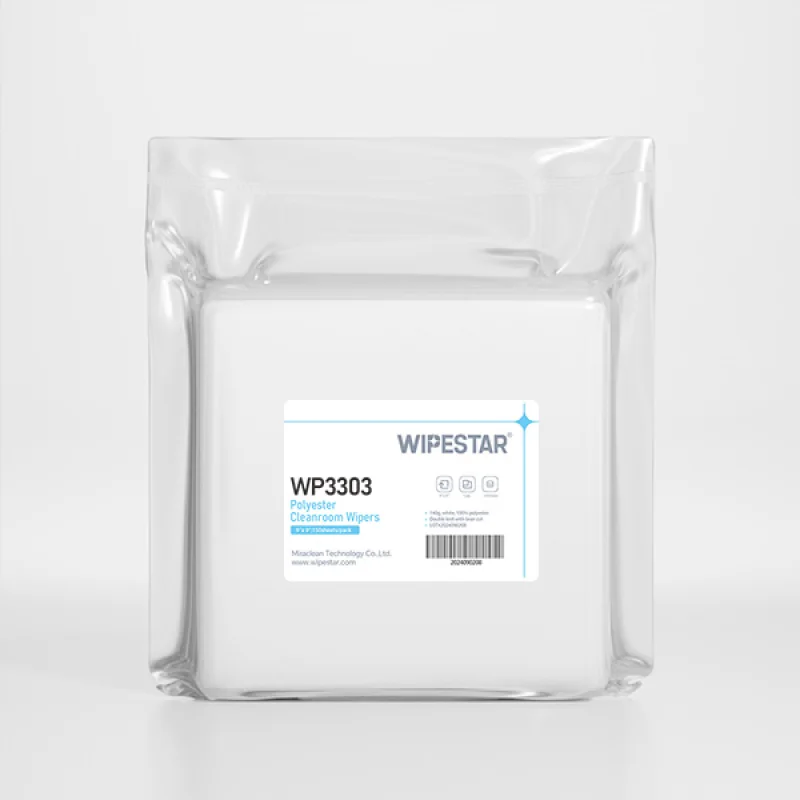
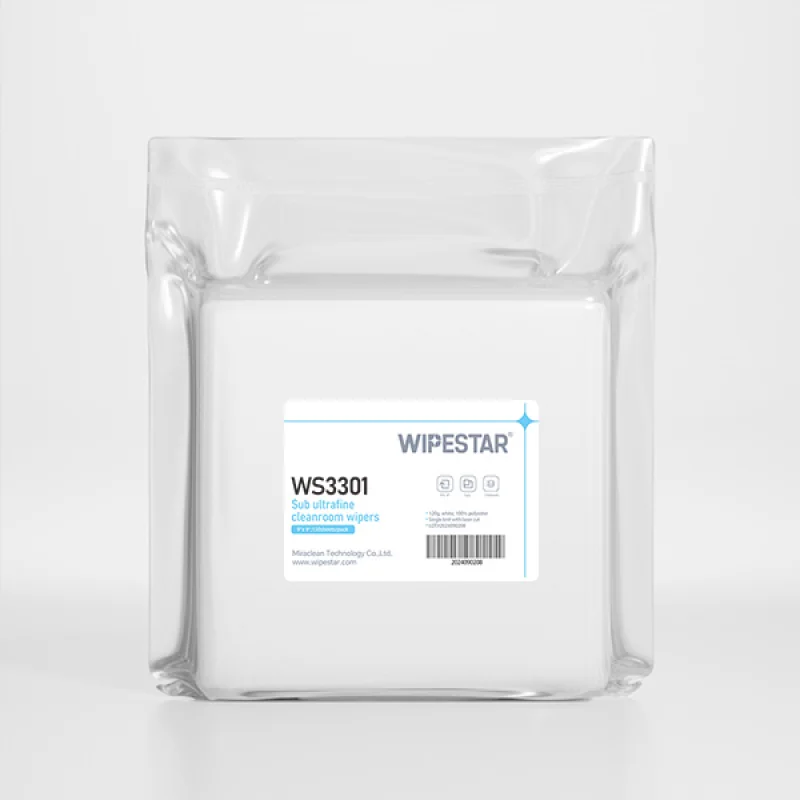
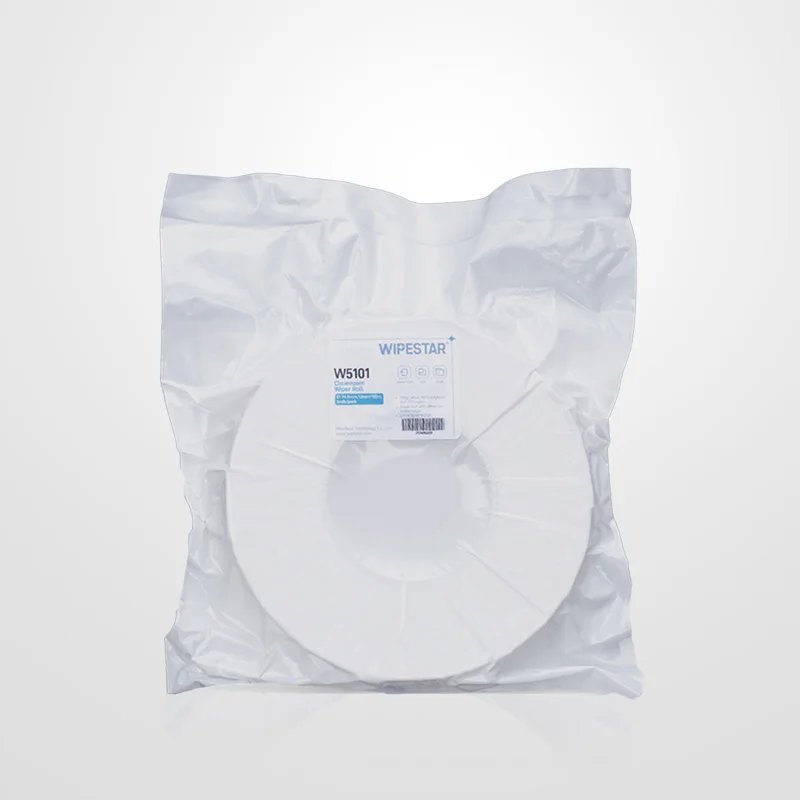
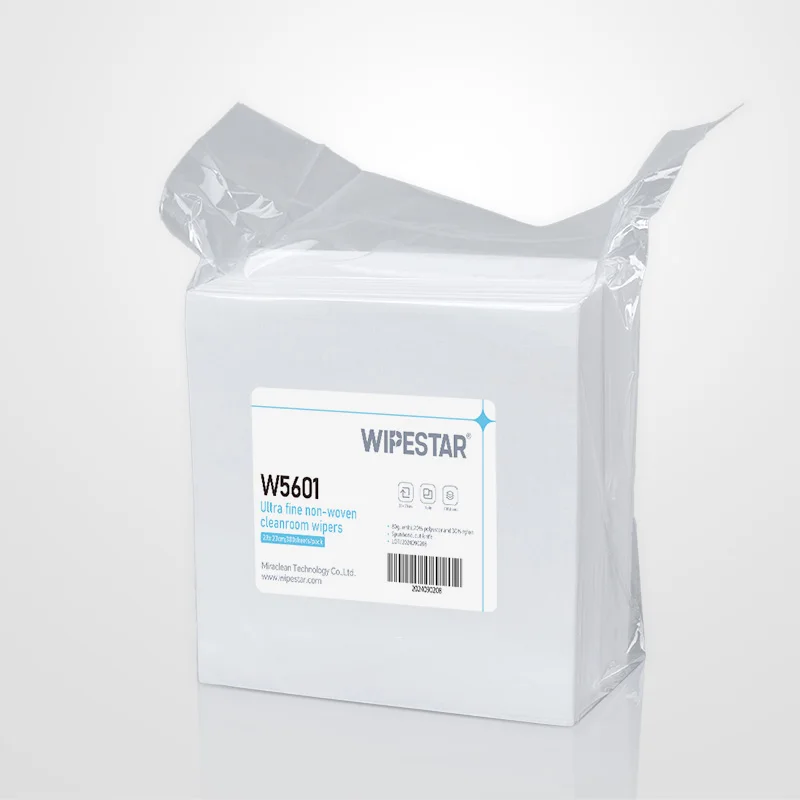
04 Cleaning protocol
Enter clean
Gown and glove for the zone. A wiper handled with a contaminated glove is a contamination source before it touches the tool.
Pre-wet, then wipe
Use the validated solvent volume. A dry microfiber on a dry surface generates charge and moves particles instead of lifting them.
One direction, one pass
Wipe from clean to dirty with a fresh face. Do not scrub back over the same area with the loaded side.
Change by zone
Do not carry a wipe from a lower-class support area into a critical zone. Use a fresh cloth and a fresh bag.
Bag the waste
Seal used wipers in a cleanroom bag before removal. A open bin is a particle source and an audit finding.
05 Frequently asked questions
A laser-sealed polyester or microfiber wiper in the 9 × 9 in format is the usual starting point. Confirm the solvent and the NVR limit with the tool owner before standardising.
No. Use ESD wipers where boards, sensors or ungrounded components are exposed. For a grounded tool exterior, a standard low-particle polyester wiper is usually sufficient.
Yes. LPC, NVR and ionic extractables are reported per lot on the cleanroom grades. Request the data sheet with the sample.
Start with a sample

