What fiber release actually measures
A wiper is a textile, and every textile sheds. Fiber release is the count of particles and fibers that leave the cloth when it is used — not the dust sitting on it when it comes out of the bag. The distinction matters, because a cloth can arrive clean and still contaminate a surface the moment it is dragged across it.
On a specification sheet the number is usually reported as particles per square metre, per wipe, or per cubic metre of air in a test drum. Those units are not interchangeable. Before comparing two suppliers, confirm which method produced the figure and under what mechanical action.
The three methods, and what each one misses
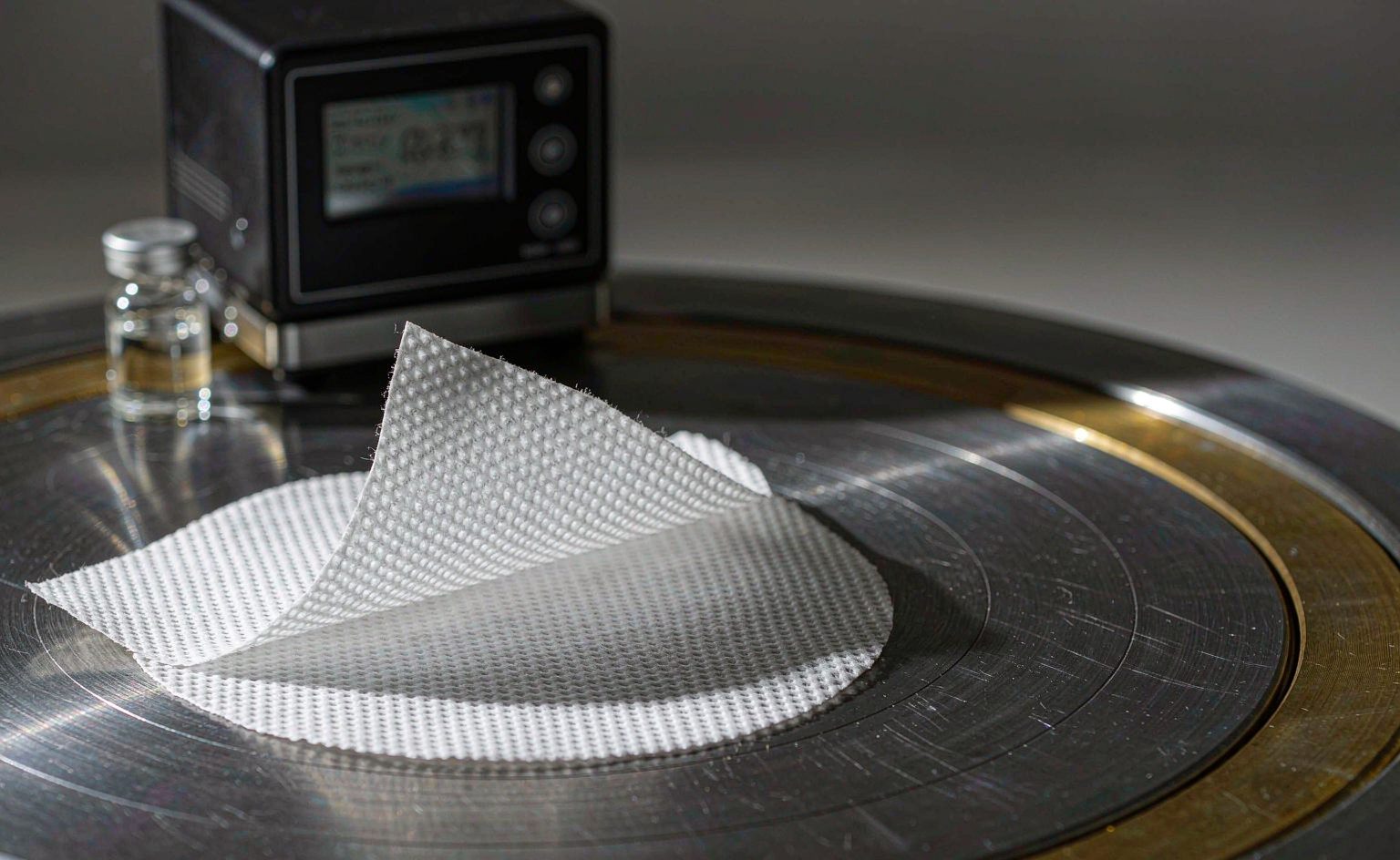
- Helmke drum (IEST-RP-CC004). A sample is tumbled in a rotating drum and the airborne particles are counted. It stresses the cloth mechanically, which makes it good at ranking dry shedding — but it says little about what happens when the cloth is wet or pressed against a surface.
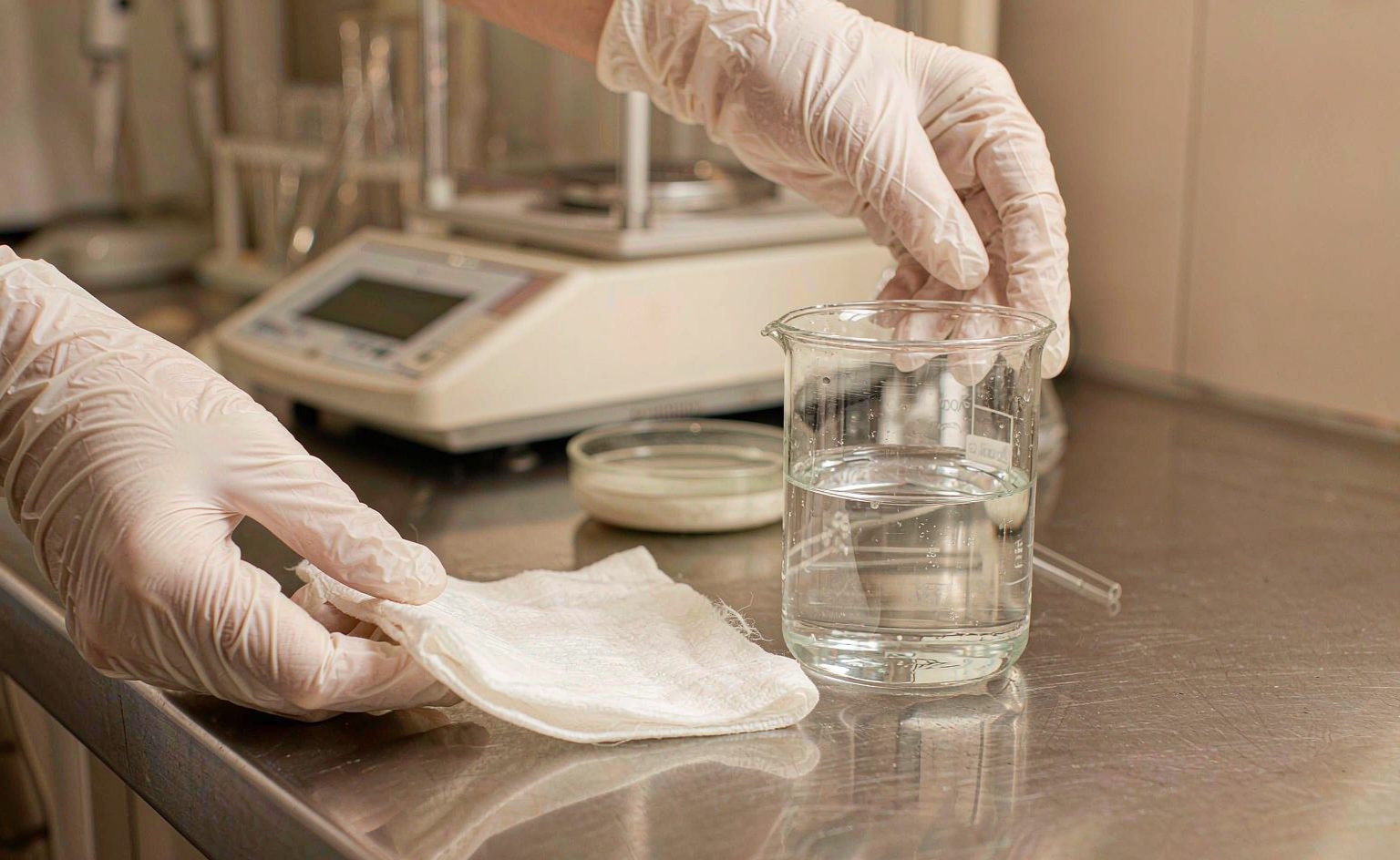
- Liquid particle count (LPC). The wiper is agitated in ultrapure water and the liquid is counted. It captures surface particles and some fiber fragments and is the method most often quoted for critical cleanroom grades. It does not measure what a dry wipe releases into air.
- Tape and visual checks. A tape lift or a black-panel wipe under raking light. Crude, but the fastest way to catch a bad lot on the receiving dock. It is a screening tool, not a specification number.
None of the three predicts scratch risk. A soft cloth can shed little and still leave a mark on a coated lens; a firmer cloth can shed more and finish cleanly. Treat particle data and surface damage as two separate decisions.
What a lot report actually tells you
Three details decide whether a number is meaningful.
- Test conditions. Dry or wet, which solvent, how many passes, what mechanical action. A wet LPC result on a cloth used dry is not evidence.
- Sample size and frequency. A single result from a development batch is not a lot release specification. Ask how many wipes per lot are tested and what the acceptance limit is.
- Reporting limit. “< 100 particles” means the method could not resolve below 100. That is not the same as 99, and it is not a guarantee for an ISO Class 3 surface.
For class-by-class expectations, see the ISO cleanroom classes guide; for how the edge contributes, see cut versus sealed edges.
GSM will not tell you this
GSM describes mass per area. It correlates loosely with absorbency and hand feel, and almost not at all with shedding. Two 120 GSM polyester knits can differ by an order of magnitude in particle release depending on yarn, knitting tension, washing and the edge finish.
“Lint-free” is a marketing phrase, not a test. The defensible version is a number, a method and a lot reference. When a supplier cannot provide all three, the claim belongs in the brochure, not in your specification.
A twenty-minute check on the receiving dock
- Pull three wipes from the inner bag, not the top of the carton.
- Wipe a dark, clean panel under raking light with the solvent you actually use. Look for a fiber trail, not for dust.
- Tape-lift the panel and inspect the tape against a white card.
- Compare against the previous lot side by side, on the same panel, in the same light.
- Record the lot number against the result. A check without a lot reference cannot be trended.
This does not replace a laboratory LPC. It catches the failures that matter between shipments: a changed yarn, a dull blade on the cutter, a sealing temperature that drifted.
Four questions before the first order
Ask for the method, the limit, the sampling plan and the last four lot reports — then ask what happens when a lot fails. A supplier who can answer the fourth question is usually the one whose first three numbers hold up.
If the application is a critical surface, run the trial before the purchase order: request two formats and compare them on your own panel. The materials guide explains which constructions are worth putting in that trial.
Bottom line. Specify the method and the lot, not the adjective. For a critical surface start with a sealed polyester wipe; for general work a cut-edge blend is usually enough. Put two formats on your own panel before the first pallet.
Frequently asked questions
Is a lower particle count always better?
Not automatically. Below a certain level the measurement uncertainty dominates, and a very low count often comes with a softer, more expensive construction that may not survive the solvent or the number of passes your process needs. Match the number to the class, then stop paying for margin you cannot use.
Can I compare an LPC result with a Helmke drum result?
No. They measure different things in different media. Compare like with like, and if a supplier mixes methods between grades, ask for a single method across the range you are buying.
Does sealing the edge remove fiber release?
It removes the cut-edge fiber source, which is usually the largest single contributor. It does not make the body of the cloth shed-free. Sealed cloths still have a particle release figure, and it still needs to be tested.
How often should particle release be tested?
At lot release for a critical grade, and at a defined interval once the program is running. Trending the numbers catches a drifting cutter or a wash cycle gone wrong faster than a single acceptance test.
Can one wipe be used with two different solvents?
Only if both are named in the compatibility data. A cloth rated for IPA can soften or leave residue in acetone, and the edge and the bag need checking too.