“High absorbency” is not a number
Absorbency appears on almost every wiper data sheet and almost never with a definition. It can mean the total liquid a cloth holds, the speed at which it takes liquid up, or the amount it releases under pressure. Those three properties behave differently, and a cloth that wins on one can lose on the other two.
Before comparing two wipers, decide which of the three your process actually depends on. A wipe used to flood a surface and then squeegee it dry needs retention under pressure. A wipe used to blot a spill needs capacity. A wipe used on a vertical panel needs rate.
Capacity: how much liquid the cloth holds
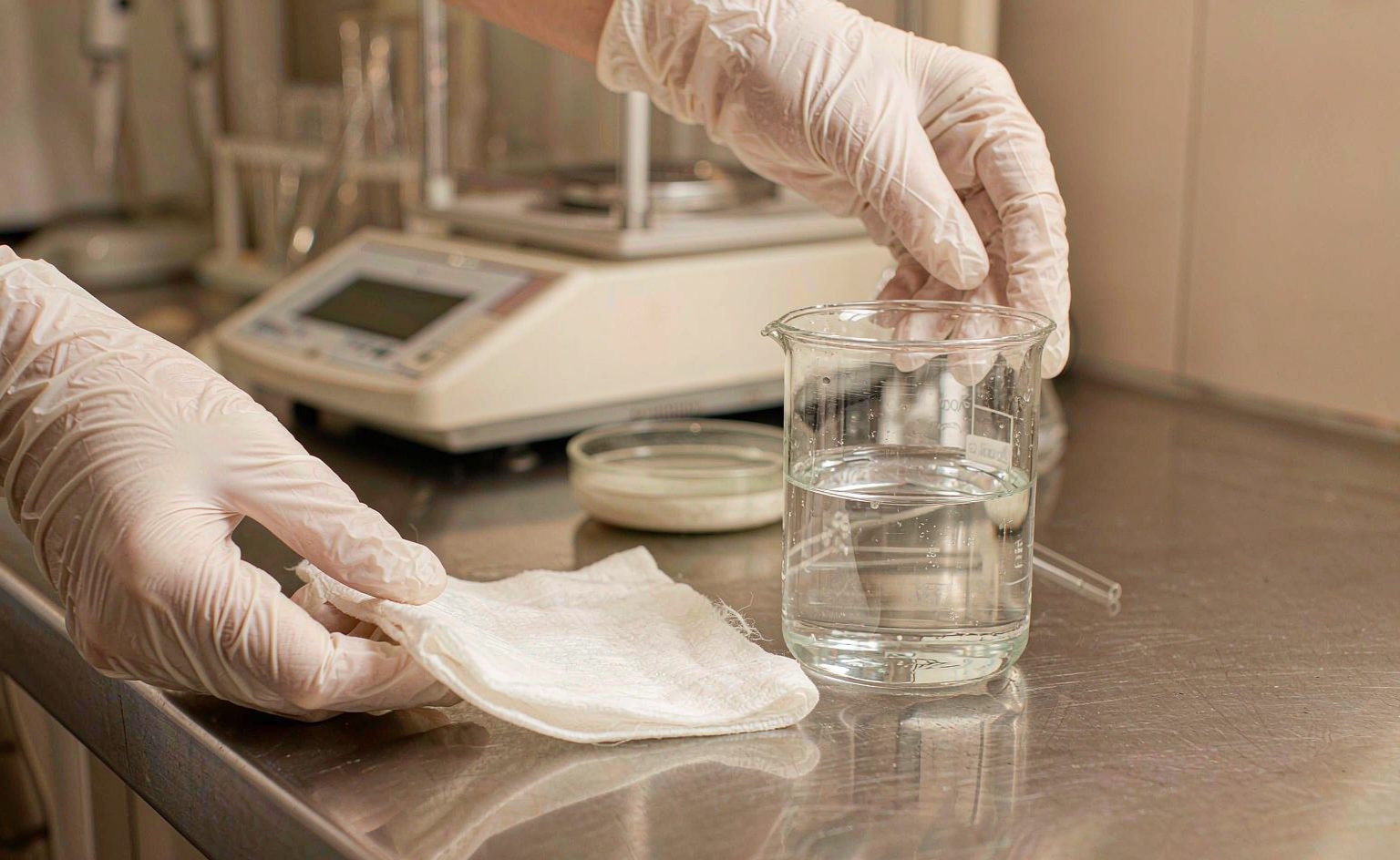
Capacity is usually reported as grams of liquid per gram of fiber, or as litres per square metre. It is measured by soaking a sample, draining it for a fixed time, and weighing the difference.
The drain time is the detail that decides comparability. A ten-second drain leaves more liquid in the cloth than a two-minute drain, and the difference can be 20% on an open, lofty structure. If two suppliers report capacity without stating the drain protocol, the numbers are not comparable.
Capacity tracks bulk more than GSM. A 120 GSM air-laid wood pulp cloth can hold more water than a 200 GSM tightly bonded polyester knit, because capacity is about void volume, not mass.
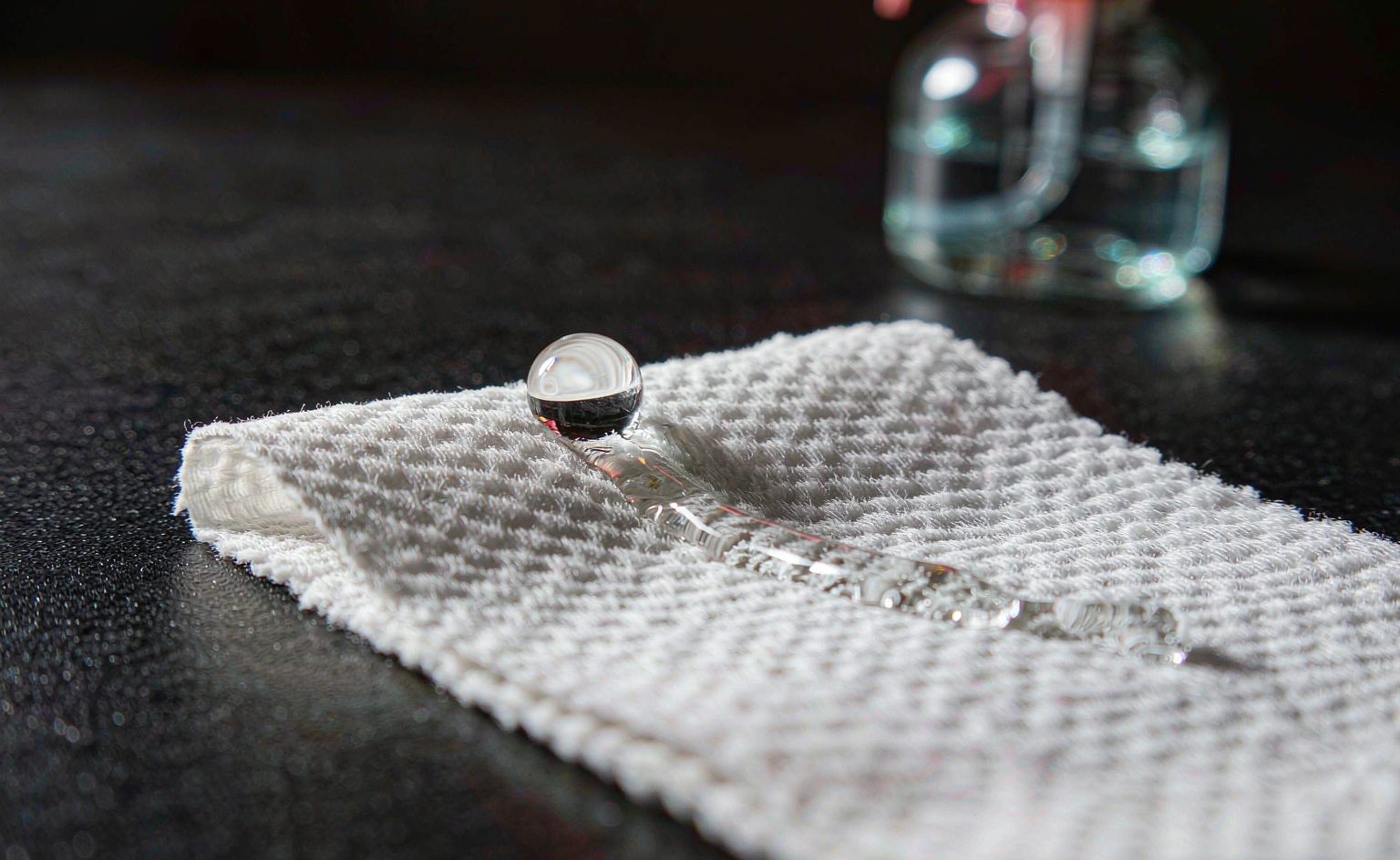
Rate: how fast it gets there
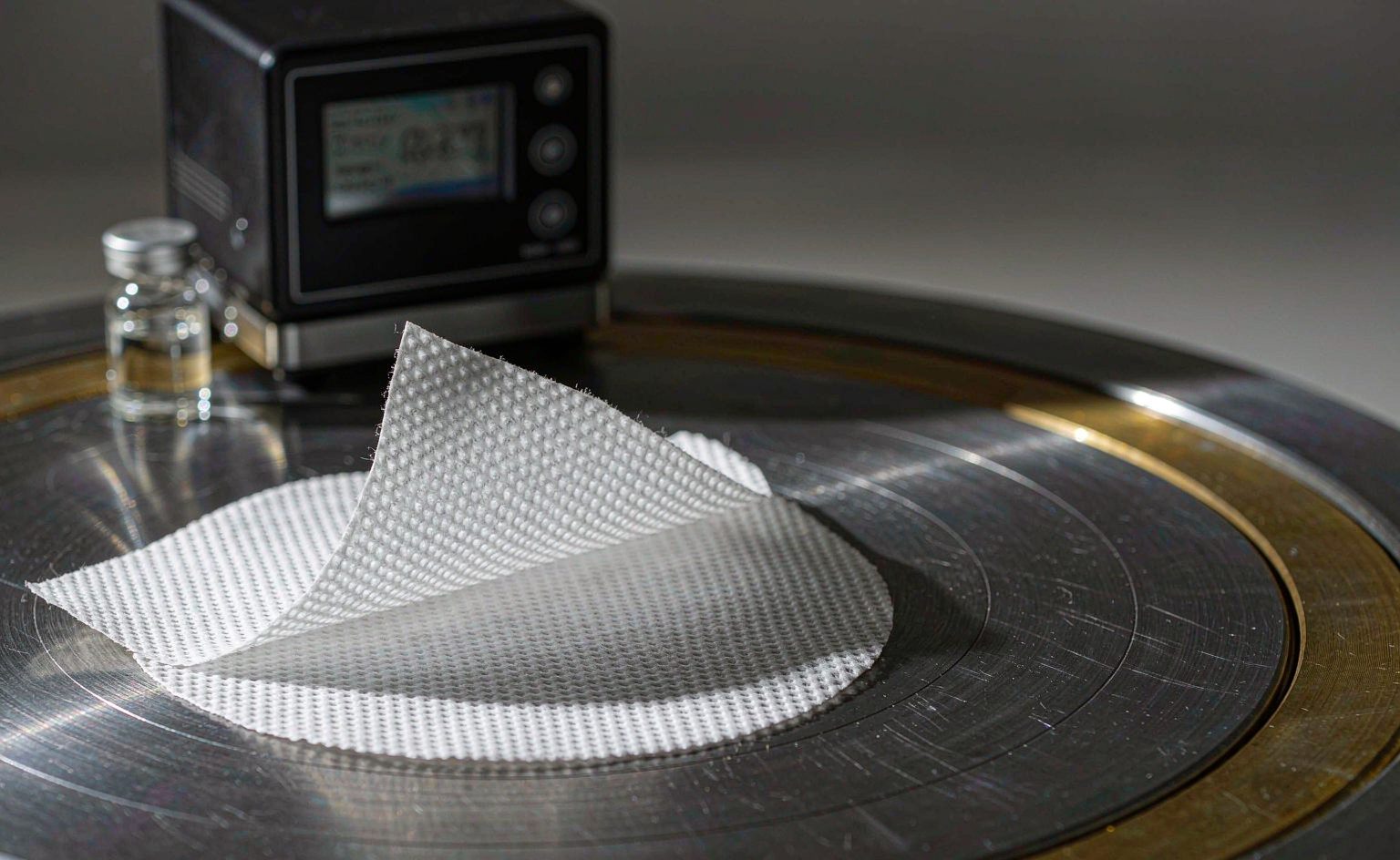
Rate is measured in seconds to absorb a fixed drop or a fixed volume, and it is the property that decides whether a wipe works on a vertical surface or a fast-moving line.
- Wood pulp and cellulose blends wick water quickly through the fiber wall. They are the fast option for coolant, water-based soil and general spills.
- Polyester and microfiber take longer to wet out but hold what they take. On a solvent they can be faster than on water, because the surface energy match is better.
- Meltblown polypropylene is fast on oil and slow on water — the opposite of cellulose — which is why it dominates oil-only tasks.
The materials guide sets out the full compatibility picture by fiber.
Retention under pressure
A cloth can hold a litre and release most of it the moment the operator presses it against a panel. Retention under pressure measures what stays in the cloth when a defined load is applied — the closest laboratory proxy for a wipe in a hand.
This is the property that separates a one-pass wipe from a two-pass wipe. High-retention structures leave less film behind, so the operator stops before the surface flashes dry and re-wets the panel. That saving shows up in the cost per clean square metre, not on the carton.
Wet strength matters too
Absorbency without wet strength produces fiber and gel on the surface. A wood pulp cloth at full saturation loses tensile strength quickly; if the task needs a wet, wrung-out wipe, a spunlace blend or a polyester knit holds together and releases fewer loose fibers.
Ask for wet tensile in both directions. A cloth that is strong in machine direction and weak across it tears into strips exactly when it is wettest.
What to put in the spec
- Name the liquid: water, 70% IPA, coolant emulsion, or the actual process solvent.
- State capacity with the drain time and the test temperature.
- State the rate method — drop absorption or wicking height — and the acceptance threshold.
- State retention under the load your operators apply, or at least confirm it was measured.
- Require wet tensile in both directions for any wipe used saturated.
If the wipe has to work on one specific surface, test it there: request two formats and compare them wet, at the same dose, with the same number of passes. The data sheet narrows the field; the trial decides it.
Bottom line. Match the test to the job: rate when the surface is vertical, capacity when you are picking up a spill, retention when the next step is a squeegee. The data sheet is a shortlist, not the decision.
Frequently asked questions
Is higher capacity always better?
No. A high-capacity cloth holds more liquid, which means more weight in the hand, slower handling and often more residue left on the surface. On a small panel it can be slower than a lighter cloth that is changed more often.
Can I compare absorbency figures from two suppliers?
Only if both name the liquid, the drain time and the sample size. Without those three, the figures describe different tests and the larger number is usually the one with the shorter drain.
Does GSM predict absorbency?
Only loosely, and only within one construction. Bulk, fiber type and bonding decide capacity; mass per area is a rough proxy that breaks down as soon as the structures differ.
Is the most absorbent wipe always the slowest?
Usually within one material family, but not across families. Meltblown polypropylene is fast on oil and slow on water; the liquid matters more than the fiber name.
How many passes should a specification allow?
Count them on your own panel against a defined acceptance criterion. Two passes on one cloth and one on another changes cost per cleaned square metre more than the carton price does.