A wiper can pass every test in the data sheet and still fail in the room. The usual reason is not the cloth. It is the bag it arrived in, the way it was opened, and where it sat for the rest of the shift.
The last metre is part of the process
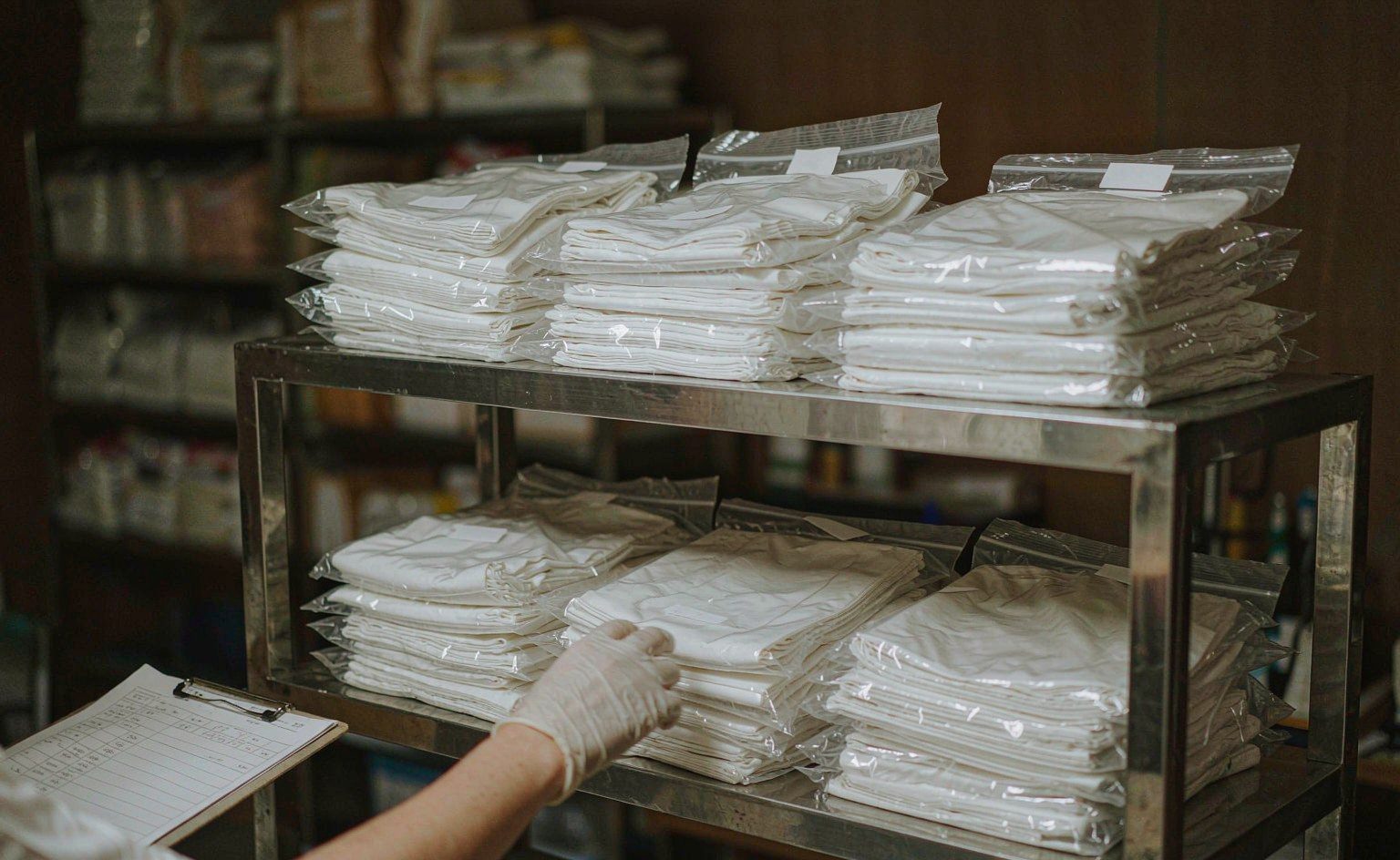
Between the receiving dock and the point of use, a wipe passes through a transfer hatch, an airlock, a changing room and a bench — the same route the ISO class describes. Each of those is a chance to pick up particles that the manufacturing process spent a lot of effort removing. Packaging is the only barrier in that journey, which makes it a process control, not a shipping detail.
What the bag has to do
Four jobs, and they do not all point to the same film:
- Particle barrier — keep the outside world out, including the fibers from the carton it travels in.
- Chemical resistance — survive the solvent that is already in the wipe, or the disinfectant sprayed on the bag in the airlock.
- Puncture and rub resistance — a bag that creases sharply during transport abrades the wipe against itself.
- Static behaviour — in electronics areas, a film that holds a charge attracts particles to the wipe as soon as it is opened.
A clear film makes the lot code and the wipe visible, which matters more than it sounds: it is the only way an operator can confirm the grade without opening the bag.
Vacuum-sealed or flat-packed
Both are legitimate. They solve different problems.
| Property | Vacuum-sealed | Flat-packed |
|---|---|---|
| Volume in transit | Low — fewer cartons, less freight | Higher |
| Creasing of the wipe | Some, at the fold lines | Minimal |
| Barrier against ingress | Strong — no air pocket to move | Good, if the seam is intact |
| Inspection before opening | Limited by the compression | Easy |
| Best fit | ISO 3–6, export, sterile lines | ISO 7–8, high-turnover benches, bulk |
The cleanroom wiper range states the default bag format for each grade.
Vacuum packing is often specified for the wrong reason. It does not sterilise anything, and it does not replace a cleanroom bag. What it does is remove the air pocket that pumps particles in and out of a bag every time it is handled.
Double-bagging and the transfer sequence
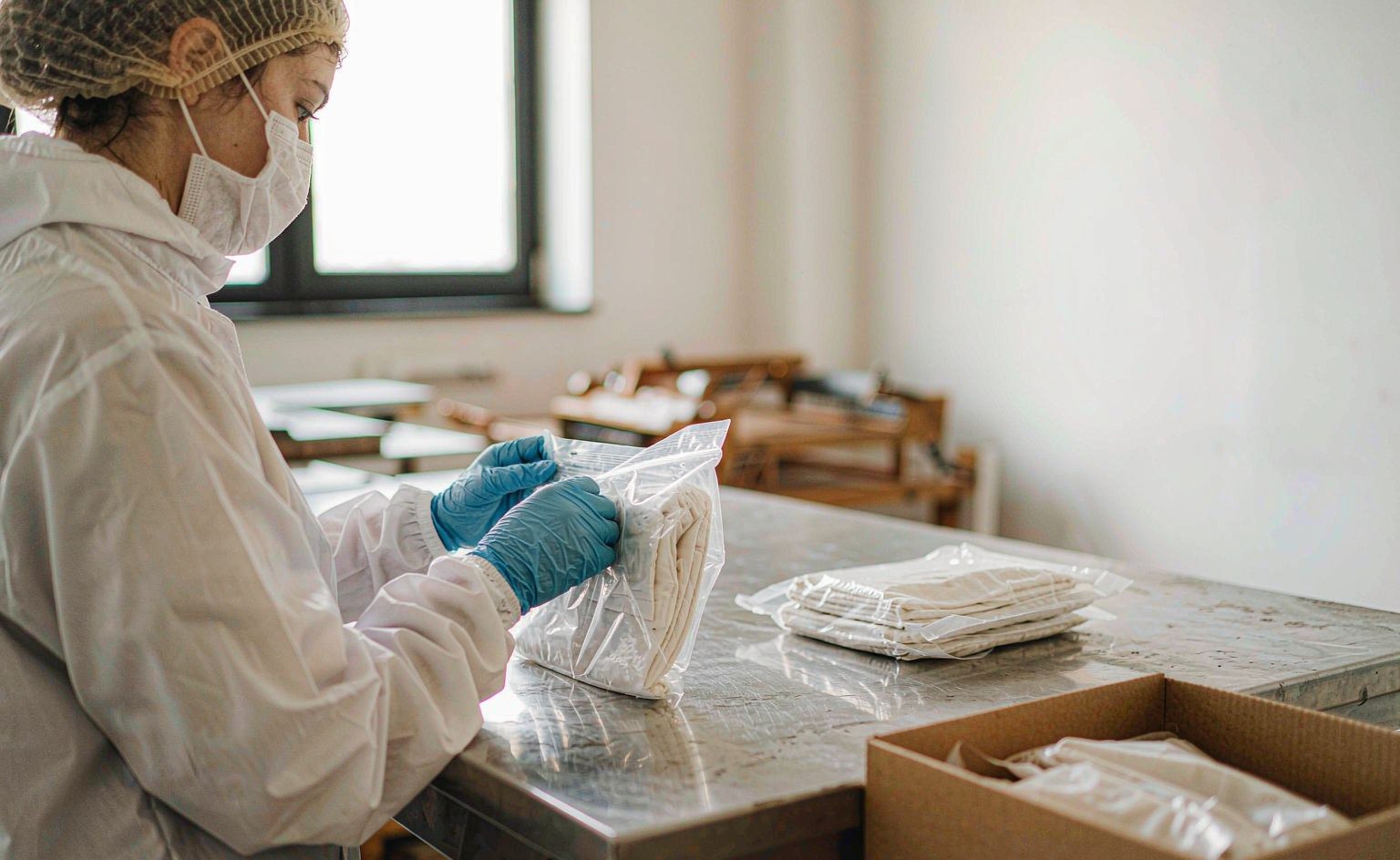
For a Grade A/B transfer, the sequence matters more than the film. A workable pattern:
- Wipe the outer bag with the disinfectant used in the airlock, and let it sit for the contact time.
- Pass the bag into the transfer hatch; open the outer bag inside the hatch, not in the corridor.
- Move the inner bag into the room; the outer bag never enters.
- Open the inner bag only at the point of use, and reseal it immediately after taking the wipes you need.
- Record the lot and the opening date on the bag, not in a notebook that stays outside.
Each step is cheap. Skipping one is what turns a validated wipe into an audit finding.
The bag becomes a source the moment it is opened
An open bag on a bench is a settling surface. Particles fall in, the bag is closed, and the next wipe picks them up. The discipline that prevents this is simple: take what you need, reseal, and never put a wipe back. A wipe that has touched a glove or a surface does not return to the bag, however clean it looks.
Two practical additions cost almost nothing: a date field printed on the bag, and a rule for how long an opened bag may stay in the room. Without a number, “still fine” becomes the rule, and it is always wrong eventually.
What the specification should state
- Film and structure — for example PE/PA, with a stated thickness range.
- Layers — single, double, or double with a specified inner bag.
- Atmosphere — vacuum or flat, and the target compression if vacuum.
- Label content — grade, size, lot, quantity, production date, expiry, gamma indicator where relevant.
- Opening and storage rule — where it may be opened, how it is resealed, and the maximum time open in the zone.
- Evidence — the lot record and the packaging specification number the audit can be shown.
Custom formats and private-label packaging can specify the film, the label fields and the layers in one brief.
None of this is exotic. It is the difference between a wipe that arrives clean and a wipe that is still clean when it touches the surface.
Samples ship in the production bag, so the packaging can be tested with the wipe — request a sample with your class and format.
Is vacuum packing necessary for an ISO 7 room?
Not usually. Flat-packed in a cleanroom bag is sufficient where the transfer route is short and the bag is opened at the point of use. Vacuum packing earns its cost in ISO 3–6, in export shipments, and anywhere the bag is handled repeatedly before it is opened.
Can wipes be gamma sterilised in the original bag?
Only if the film and the seal are qualified for the dose. Gamma can embrittle some films and affect the seal strength, so the sterility assurance letter should name the packaging, not just the wipe. If the line is sterile, ask for the packaging specification with the dosimetry record.
How long can an opened bag stay in the cleanroom?
Define it rather than assume it. A common rule is one shift for an opened inner bag, with resealing after each use and a new bag at the next shift. The correct number depends on the class and the air changes, but a number written on the bag beats a habit held in someone's head.